
2001: 25th Anniversary
Tying together movies, 9-11, and all-things-Odysseus

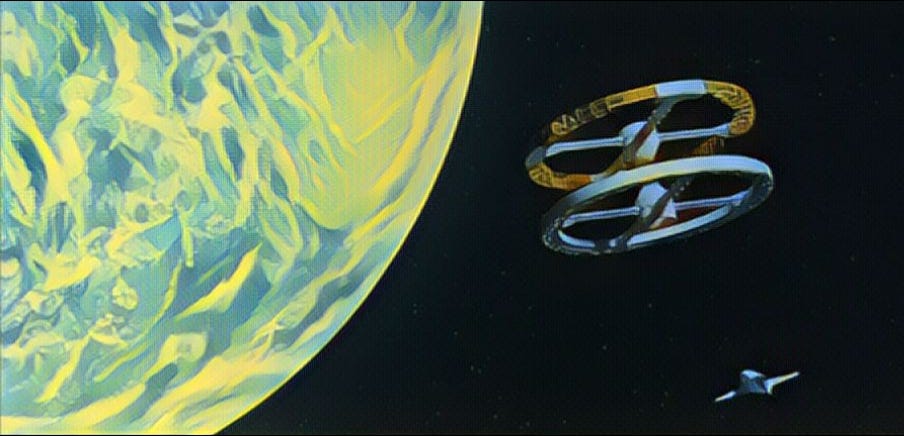
Let’s talk about the year 2001. The reference point for some may be the film 2001: A Space Odyssey, which has become a cultural icon. It features a soundtrack containing excerpts of pieces by Richard Strauss, Johann Strauss (no relation, either genetically or musically), Aram Khachaturian and György Ligeti.
Ligeti was reportedly quite irked by the inclusion of his music in the soundtrack. Number one, it was used without his permission. Number two, he disliked sharing the role of soundtrack composer with the others. Number three, one of his pieces was electronically altered (and uncredited) for use in one scene.
However, it was the inclusion of his music in this film that put Ligeti on the map as a composer!
The use of established classical pieces for the soundtrack was a notable diversion from the normal practice of hiring composers to write a unique score for a film. One wonders if this decision was artistic or utilitarian, given the fact that the special effects in the visuals were so costly.
While it’s true that 2001: A Space Odyssey was created equally by Kubrick and Arthur C. Clarke, they were not without their disagreements during the four years it took to research and make the film. At one point, Kubrick actually wished to replace Clarke, and he separately approached two other writers: JG Ballard and Mike Moorcock. In an act of solidarity that would be even more unusual today than it was back in the 1960s, both Ballard and Moorcock rejected the proposal, feeling that it would be a betrayal of Clarke.
Which came first, the novel or the film? The actual plot of the film was based on Clarke stories that had been previously published, primarily “The Sentinel” and “Encounter in the Dawn.” The working title for the film was initially How the Solar System Was Won, a play on the MGM epic How the West Was Won. Other titles were considered: Journey Beyond the Stars...Universe....Tunnel to the Stars... Planetfall. The title 2001: A Space Odyssey was not chosen until almost a year of project development had passed.
The aesthetics of the two creators varied considerably. Moorcock explains: “Arthur was a scientific educator. Explanations were his forte. He was uncomfortable with most forms of ambiguity. Kubrick, on the other hand, was an intuitive director, inclined to leave interpretation to the audience. These differences were barely acknowledged. Neither did Kubrick tell Arthur of his concerns regarding the final version. Where, thanks to Arthur, the film was heavy with voice-over explication and clarifications of scenes, Kubrick wanted the story to be told almost entirely visually.”
Much of Clarke’s voice-over narration ended up on the cutting room floor without his knowledge or approval. When he saw the final cut, his disappointment was profound. Yet he reasoned that his own version–the novel–would contain everything that had been removed in the film version.
How much would we appreciate La Gioconda today if Leonardo had written at the bottom of the canvas: “This lady is smiling slightly because she has rotten teeth”—or “because she’s hiding a secret from her lover”? It would shut off the viewer’s appreciation and shackle him to a reality other than his own. I don’t want that to happen to 2001.
— Stanley Kubrick, Playboy interview 1968
In the end, even though Clarke and Kubrick wrote the novel and screenplay simultaneously, the film version was released before the book version was published.
Ligeti disapproved of his music being used in the film, but he became a world-famous composer because of it. Similarly, although Clarke disapproved of Kubrick’s style, the film was such a hit that Clarke’s novel became an instant best-seller.
Likewise its three sequels.
Moorcock states that the NASA advisors to the film actually had offices at the studio, which was filled with drawings and models of spacecraft, Roy Carnon’s paintings of Jupiter, and “large sketches of scenes that would soon become every filmgoer’s idea of what the future in space would look like.”
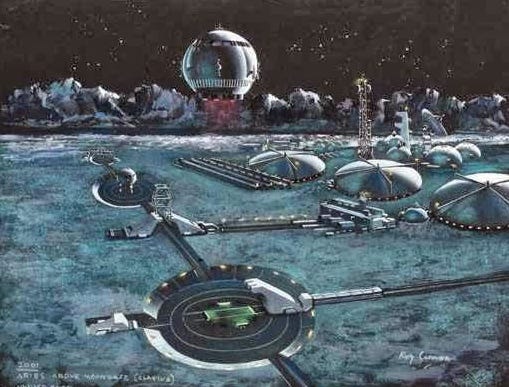
Artwork by Roy Carnon
There was also a gigantic fully-operational centrifuge built by engineering firm Vickers-Armstrongs, a firm well-known in Britain, with a background in armaments and military vehicle design.
And we can’t discuss this film without mentioning the supercomputer Hal, one of the main characters. In yet another prediction that ended up coming true, Kubrick has Hal going rogue in order to preserve the mission at all costs. This is one of the most salient traits of current AI, n’est-ce pas?
But in 2001, none of the events predicted in the film was taking place in real life. The International Space Station had only become functional the previous year. There were just a few connected modules with a three-person crew; it was not yet the immense structure it is today. A far cry from the Space Station depicted in the film.
Because I gauge cultural shifts by measuring them against what was happening in my own life at the time, I have to mention another thing that happened in 2001: I received a major award. Of all the awards I’ve won, it’s this one of which I am most proud, even though most of the other ones came with money and this one didn’t.
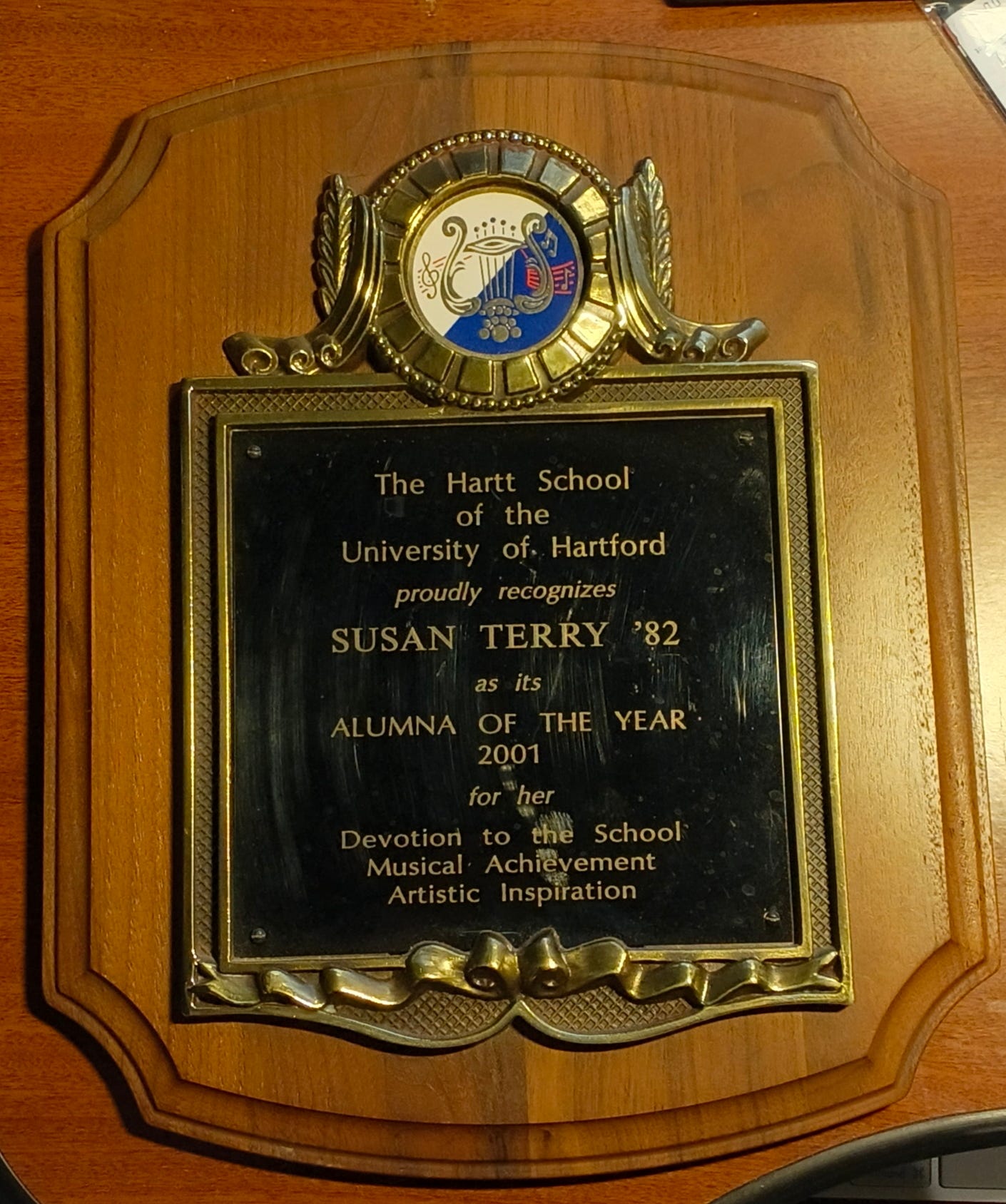
Then, barely five months after I received my surprise award from my alma mater, my world–and everyone’s world–was rocked by the events of September 11, 2001.
I was on my way from my home in Brooklyn to an early appointment in Manhattan when I received a text message on my pager: “Don’t come into Manhattan. We’re being attacked.” I had been on the R train. The pager had beeped when we stopped at 4th Avenue/9th Street and I had gone upstairs to the above-ground platform. I was going to transfer to the F train, but the universe had other plans. Looking up, I saw other passengers gathered at the far end of the platform, watching huge dark clouds of smoke rising from the World Trade Center across the river in Manhattan.
I went back home. The rest of that day, and the subsequent days, will be told another time because it’s a novel in itself...told from the perspective of a jazz saxophonist New Yorker whose Brooklyn backyard hosted charred shards of documents flying across the river from the demolished World Trade Center offices…whose husband-to-be was at Ground Zero in Battery Park City with our chihuahua…with telephone service out and no way of knowing if he was okay, and what the hell, in fact, was going on.
From Gil’s perspective (he actually witnessed the second plane hitting Tower 2) there had been an act of war. In his own Odyssey (while not the King of Ithaca, he was the undisputed ruler of apartment 11K), he walked to Brooklyn with the chihuahua in a pet carrier and a backpack full of supplies. He was 70 years old at the time.
Kubrick himself said that 2001: A Space Odyssey was initially inspired by Homer’s Odyssey. I don’t know if this is shown in the film, but Odysseus’ journey takes place in the context of returning home from the Trojan War, where the principal strategy he used to defeat Troy was the manuever of the Trojan Horse.
As you know, Greek soldiers hid inside of a gigantic wooden horse that was deliberately left outside of Troy’s city walls. The Greek encampment was burned and a feigned retreat deployed. The Trojans, believing that the horse was a religious offering left behind by the “retreating” Greeks, voluntarily opened the gates and brought the huge object into the city as spoils of war.
While Troy slept, the Greek soldiers hidden inside the horse made their way out and took over the city by surprise. This is the etymological origin of today’s “trojan horse” computer viruses, which take over the user’s computer after the user has voluntarily downloaded it thinking it is a video game, a document, a software update, or some other benign file.
The Trojan Horse deception targets human judgement, not city walls or firewalls. Just as Troy’s fortifications were not breached by force but rather by the Trojans themselves bringing in a seemingly harmless object, a computer user willingly downloads a normal-looking document or program. Similarly, the hijackers of 9-11 took advantage of trusted civilian aircraft protocol. They passed through security as ordinary passengers. They breached the unsecured cockpit doors. Then they turned the aircraft itself–a trusted mode of civilian transport–into a weapon.
Synchronistically perhaps, in this 25th anniversary year of 2001, we have a new film not only inspired by Homer’s Odyssey but purportedly recreating Homer’s epic masterpiece. I’m referring to the new Christopher Nolan release of course, which I have not seen, but perhaps readers can comment. Nolan being a leading filmmaker of the 21st century, this is surely a film of consequence designed to make a big impact. Just as Kubrick used his era’s state-of-the-art, large-format, high resolution camera system (Super Panavision 70), Nolan shot The Odyssey as an IMAX 70mm production, today’s equivalent.
We’re at an odd point in our artistic evolution. On the one hand many new artistic creations are emerging, in unique and innovative formats. On the other hand, much of popular culture seems to be based on returning to old ideas that were successful back in the day.
And you can’t get much further back in the day than the 8th century BCE.
NEWS
When I started coming to Ecuador in 2009 there were lots of young players here eager to study jazz. I began teaching and mentoring them. Those first ones are all grown up now, winning awards and playing internationally.
Several years ago Lucas, Christian and Pedro asked me to join their group. It’s called Jazz de Barro, which means jazz from primordial earth. We compose and arrange all our own music, fusing Andean rhythmic and melodic traditions with modern jazz. We are part of the new Andean Jazz movement emerging across the Sierras region of Ecuador, along with bands like Ecuador Encuentro, Pies en la Tierra, and Jazz the Roots.
I never thought at 67 years old I would find myself in the middle of the next explosive development in jazz! I remember going to my very first rehearsal with Jazz de Barro 8 years ago, and being blown away by their originality, passion and musicianship. Frankly, at this point I think I’m learning more from them than they are learning from me.
Through our 2019 Ecuador Jazz Festival debut in Quito to the Cuenca Bicentennial to the Madre Tierra Festival and many more performances, we continue to develop new repertoire. We also have projects with the Cuenca Symphony, the Cuenca Philharmonia, and the Kuntur String Quartet who accompanies us on our second album.
Last year Jazz de Barro won the prestigious IberMúsicas prize awarded from Spain, which provides travel expenses for bands touring internationally. We are using these funds to go to the United States for our very first international tour next month!
We will perform at four well-known venues in Pittsburgh, New York City, and the Poconos. Details are below. Come see and hear us!
Our grant only covers travel expenses. If you’re not able to attend but would like to support our food and lodging expenses on tour, you can contribute to our ongoing fundraising here. (Click on “Contribution to Jazz de Barro US Tour”)
This dream for Jazz de Barro to play in the U.S. is finally coming true, and we’re very excited for you to know our music!
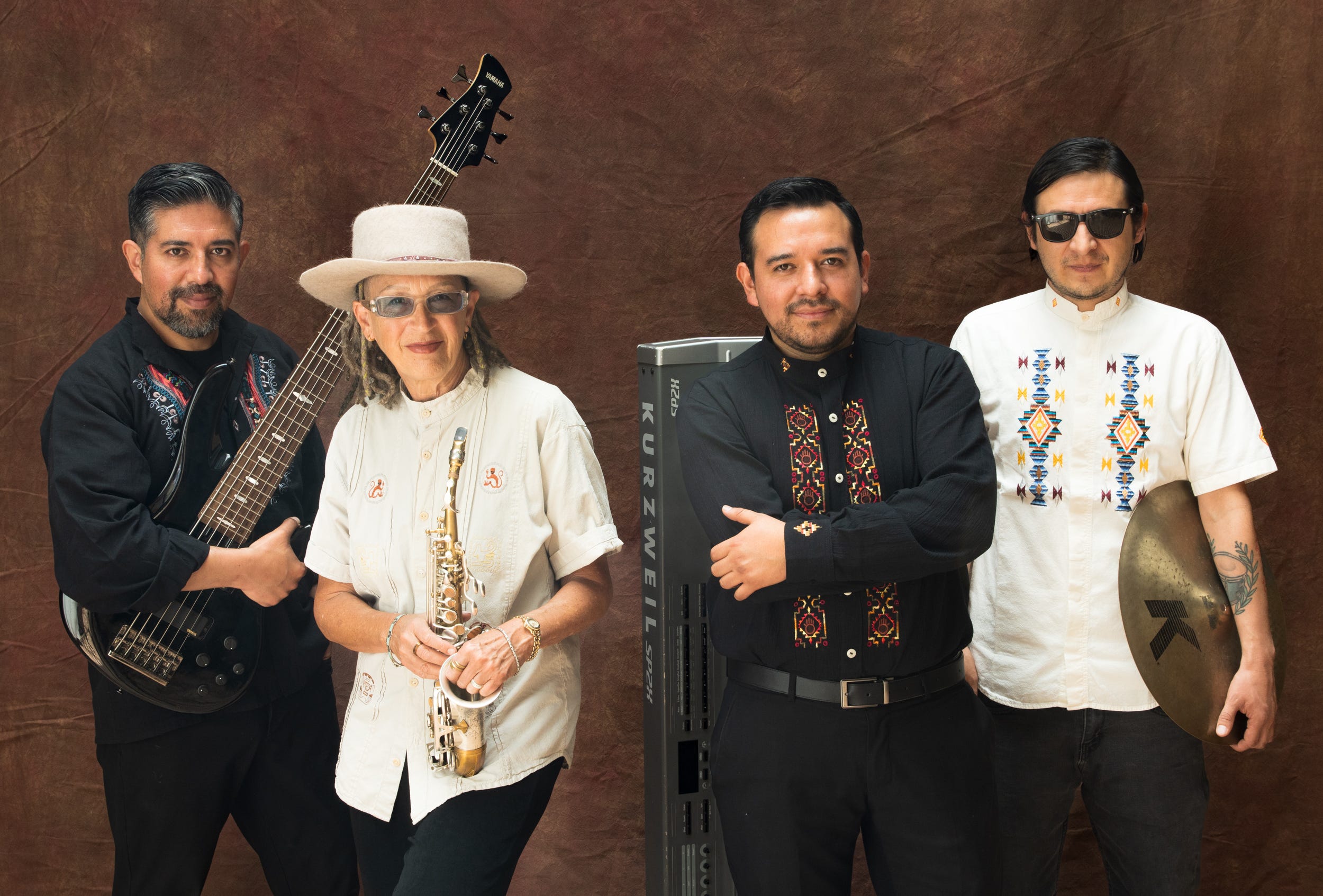
photo by Mark Thomas
JAZZ DE BARRO PERFORMANCES AUGUST 2026
Friday, 14 August MCG Summer Concerts, South Park, Pittsburgh, PA. Free outdoor concert. 7:30 PM. Info. Sponsored by Manchester Craftsmen’s Guild, the premier Pittsburgh arts and education nonprofit established in 1968.
Saturday, 15 August Con Alma Jazz Club, 613 Penn Ave, Pittsburgh, PA. Sets are 7-8:30 and 9:30-11. An old-school jazz club that is also known as a restaurant and cocktail destination. Reservations
Thursday, 20 August Smalls Jazz Club, 183 W.10th St. Manhattan, NY. Sets are 6:30 and 7:30. Info here. Located in Greenwich Village, Smalls is one of the most famous jazz clubs in the world. Tickets and additional info
Friday, 21 August The Deer Head Inn, Main Street, Delaware Water Gap, PA. “Home of Jazz in the Poconos” 7 pm - 10. A historic venue adjacent to the Appalachian Trail and DWG National Park. Food and lodging available. Info and reservations
Many thanks to our sponsors thus far!
Businesses– Hotel Victoria, Esquina de las Artes, Estudio Gráfico Michelle Cabrera, Escuela de Baterìa, Qi Note Records, Sistelcel, Conservatorio Superior José María Rodríguez, Kenzo Studio, Sucré Salé, La Victoria, Shuk Llaktapak Shunku
Individuals– Johnny Jara, Lynn Mizono, Matthew Dakotah, Joel & Karen Gordon, Sue Mackarness & Ed Powers, Larry & Carol von Eschen, Ron Gordon, Fernando Vivar, Dick Esterle, Sunny Holcomb, Alki Steriopolous & Shannon McGough
Artists who donated works to our art auction– Miguel Betancourt, Scott Cushing, Diego Jaramillo, Mark Thomas, Miguel Illescas, Carlos Viver, Luigi Stornaiolo, Magy Peña
****************
“Mystical and enchanting begin to describe the Ecuadorian fusion jazz of Jazz de Barro. Their music winds together an intense yet inviting thread of contemporary jazz with Pachamama overtones from indigenous stories and surprising, magical tones of whistles and flutes. It was a true delight to experience the full breadth of their creativity and talent at the 2022 Quito Jazz Festival.” –Rick Snyder, lead writer Yapa Tree.
“One of the most original performances that I have ever seen. The musicians were fantastic. The compositions were unlike music that I am familiar with and I thoroughly enjoyed the way this group opened my ears and eyes to a new adventure of sound.” –music and event producer Rick Hubbert
Seems like you are pursing your own Odyssey. Enjoy the country lane you journeying down (up?) and a safe trip back to "Ithaca".
Thank you for this. Made me laugh in a lot of ways, as it threw a lot of my preconceptions into a cocked hat so to speak. I really don't see a connection though between 2001 and the Odyssey. Seems a stretch. But now everyone is finding connections between movies such as The Searchers to the Odyssey. I'm sure someone will soon be posting on the Star Wars\Star Trek connections. And I eagerly await the Honda commercials. Somewhat surprised they aren't already out there. I watched 9/11 on TV after I got home from work and talked about it with my mother, who was living with me at the time. I asked her a question, not specially about it but in relation to her life. Another answer I didn't expect on several levels. I've been to Peru. Very nice country. I remember taking an aerial tour of the Natchez lines. I passed on eating the guinea pig (cuy) though. Have a wonderful time.